











United States, United Kingdom, Italy, Netherlands, Spain, Germany, France, and Poland
1. Introduction
As electric bikes (e-bikes) continue to grow rapidly worldwide, governments have updated regulations to balance road safety, environmental goals, and industry development.
As of early 2026, the United States and European countries show clear regulatory differences, but the overall direction is consistent:
Standard pedal-assist e-bikes remain legally classified as bicycles, while high-power, high-speed, or modified models face increasingly strict regulation.
This article provides a consolidated overview of the latest 2026 electric bicycle regulations in the United States, United Kingdom, Italy, Netherlands, Spain, Germany, France, and Poland.
2. United States
In the United States, electric bicycle regulation is primarily governed at the state level, though most states follow the widely adopted three-class system:
-
Class 1: Pedal assist only, up to 20 mph (≈32 km/h)
-
Class 2: Throttle-assisted, up to 20 mph
-
Class 3: Pedal assist only, up to 28 mph (≈45 km/h)
Key Developments for 2026
-
Stricter battery safety oversight, especially for lithium-ion batteries (UL or equivalent certification increasingly required)
-
Mandatory labeling requirements, indicating class, top assisted speed, and motor output
-
Increased enforcement against tampering, such as speed unlocks or controller modifications
Within legal class limits, e-bikes are generally treated as bicycles and do not require registration, insurance, or a driver’s license. Once modified beyond legal limits, they may be reclassified as motor vehicles.
3. United Kingdom
In the UK, electric bicycles are defined as EAPCs (Electrically Assisted Pedal Cycles). Regulations remain largely unchanged in 2026.
Legal requirements:
-
Maximum continuous rated power: 250W
-
Motor assistance cuts off at 25 km/h
-
Pedal assistance only (no throttle)
Compliant EAPCs:
-
Do not require insurance, registration, or licensing
-
Helmet use is recommended but not mandatory
Any vehicle exceeding these limits is treated as a motor vehicle under UK law.
4. Italy
Italy applies the EU-wide EPAC definition:
-
Motor power ≤ 250W
-
Assistance cut-off at 25 km/h
-
Pedal assist only
2026 Enforcement Focus
-
Stronger enforcement of lighting and visibility requirements
-
Increased roadside inspections at night or in low-visibility conditions
It is important to note that Italy’s major 2026 regulatory tightening applies to electric scooters, not electric bicycles.
5. Netherlands
The Netherlands enforces one of the strictest compliance regimes in Europe.
Legal Electric Bicycles (EPACs)
-
≤ 250W motor power
-
≤ 25 km/h pedal assistance
-
Pedal assist only
-
Mandatory EN 15194 compliance and CE marking
Standard e-bikes:
-
No insurance or registration required
-
No helmet requirement
Non-compliant models (high-power fat-tire bikes or modified controllers) are commonly reclassified as mopeds, triggering insurance and registration requirements.
In 2026, discussions continue regarding potential minimum age limits, though no nationwide rule has been finalized.
6. Spain
Spain continues to clearly distinguish between electric bicycles and electric scooters.
Electric bicycle (EPAC) definition:
-
≤ 250W
-
≤ 25 km/h
-
Pedal assist only
2026 Clarification
-
Mandatory insurance applies to electric scooters, not to electric bicycles
-
Adult helmet use for e-bikes is generally not mandatory (local exceptions may apply)
7. Germany
Germany maintains a highly structured and strictly enforced framework.
Standard Pedelecs
-
≤ 250W
-
≤ 25 km/h
-
Treated as conventional bicycles
S-Pedelecs (up to 45 km/h)
-
Insurance required
-
License plate required
-
Helmet mandatory
-
Use of bicycle paths prohibited
Unauthorized speed unlocking is treated as a serious offense with potential legal consequences.
8. France
France applies the EU EPAC definition:
-
≤ 250W
-
≤ 25 km/h
-
Pedal assist only
Compliant e-bikes:
-
No insurance or registration required
-
Helmets mandatory for minors only
In 2026, France continues to focus heavily on anti-tampering enforcement, with penalties including fines and vehicle confiscation.
9. Poland
Poland fully aligns with EU standards:
-
≤ 250W
-
≤ 25 km/h
-
Pedal assist only
No insurance or registration is required, but riders must respect urban speed limits and cycling infrastructure rules.

10. Comparative Table of E-Bike Regulations (2026)
| Country | Legal Definition | Max Power | Assist Limit | Throttle Allowed | Insurance | Registration | Helmet |
|---|---|---|---|---|---|---|---|
| United States | E-Bike (Class 1–3) | State law (often ≤750W) | 32 / 45 km/h | Yes (Class 2) | No* | No* | State law |
| United Kingdom | EAPC | 250W | 25 km/h | No | No | No | No |
| Italy | EPAC | 250W | 25 km/h | No | No | No | No |
| Netherlands | EPAC | 250W | 25 km/h | No | No | No | No |
| Spain | EPAC | 250W | 25 km/h | No | No | No | No |
| Germany | Pedelec | 250W | 25 km/h | No | No | No | No |
| France | VAE (EPAC) | 250W | 25 km/h | No | No | No | Minors |
| Poland | EPAC | 250W | 25 km/h | No | No | No | No |
* Reclassification applies if legal limits are exceeded.
11. Frequently Asked Questions (FAQ)
Q1: Can one e-bike be legally used in both the US and the EU?
Generally, no.
EU rules require 250W / 25 km/h / no throttle, while the US allows higher limits. Dual-market models require strict software limiting, no throttle hardware, and full EU certification.
Q2: Is a disabled or software-limited throttle allowed in Europe?
In most EU countries, the presence of a throttle is sufficient for non-compliance, even if disabled by software. Physical removal is the safest approach.
Q3: What counts as “illegal modification”?
-
Speed unlocks
-
Controller or firmware changes
-
Power output increases
In countries such as Germany, France, and the Netherlands, these can result in fines, confiscation, and loss of insurance coverage.
Q4: Are fat-tire e-bikes legal in Europe?
Tire size itself is not regulated. Legality depends on power, speed, pedal-assist operation, and certification. High-power fat-tire models are frequently reclassified.
Q5: Is insurance mandatory for e-bikes in 2026?
No, for compliant EPAC/Pedelec models. Mandatory insurance applies to scooters, S-Pedelecs, and reclassified vehicles.
Q6: What are the top compliance priorities for manufacturers and exporters?
-
Power and speed accuracy
-
Battery safety certification
-
Anti-tampering design
-
Permanent regulatory labeling
-
Complete CE / UKCA / EN 15194 documentation
12. Key Trends Looking Forward
-
Increased enforcement against borderline or disguised high-power models
-
Stronger battery safety requirements due to fire risks
-
Gradual introduction of age limits and urban access restrictions
14. Brand Compliance Example: Fiido Electric Bicycles
As a global electric bicycle brand, Fiido designs and manufactures its electric bicycles in strict accordance with the applicable laws and technical standards of local markets, including the United States, the European Union, and the United Kingdom.
Fiido electric bicycles are developed based on the principle of “local compliance first”, ensuring that motor output, assisted speed, control logic, and vehicle configuration meet the legal definition of an electric bicycle (EPAC / Pedelec / E-Bike) in each target country.
Depending on the destination market, Fiido models are configured to comply with relevant requirements such as maximum assisted speed, pedal-assist operation, product labeling, battery safety, and conformity certification (e.g., CE, EN 15194, UKCA).
Fiido C11 – Urban Commuting Electric Bicycle
The Fiido C11 is designed as a city-oriented electric bicycle for daily commuting and urban mobility.
Its overall configuration emphasizes comfort, practicality, and regulatory compliance, making it suitable for use in regions where electric bicycles are legally treated as conventional bicycles.
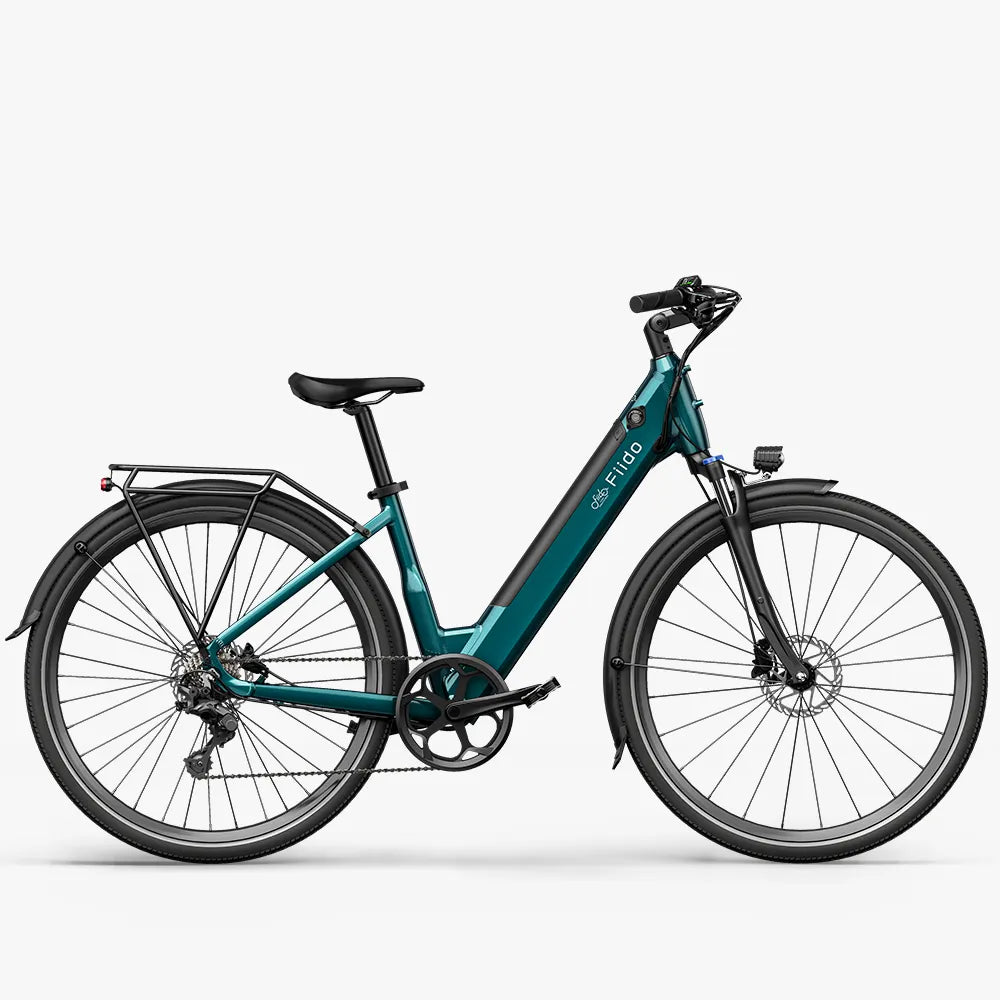
Fiido C11 City E-bike
Fiido C11 - the best electric bike for a dynamic nd safe city adventure.
Reminder: Prices are subject to the product detail page ,some earlier card details may have been updated.
Key characteristics include:
-
Pedal-assist–focused riding experience
-
Configuration aligned with EU and UK EPAC requirements
-
Upright riding position suitable for everyday commuting
-
Design intended for paved urban roads and cycling paths
The Fiido C11 is positioned as a compliant solution for riders seeking a reliable electric bicycle for city travel while remaining within local legal limits.
Fiido Titan – Utility and All-Terrain Electric Bicycle
The Fiido Titan is designed for heavy-duty use, longer-distance riding, and varied terrain, while still maintaining a strong focus on regulatory compliance in its market-specific versions.
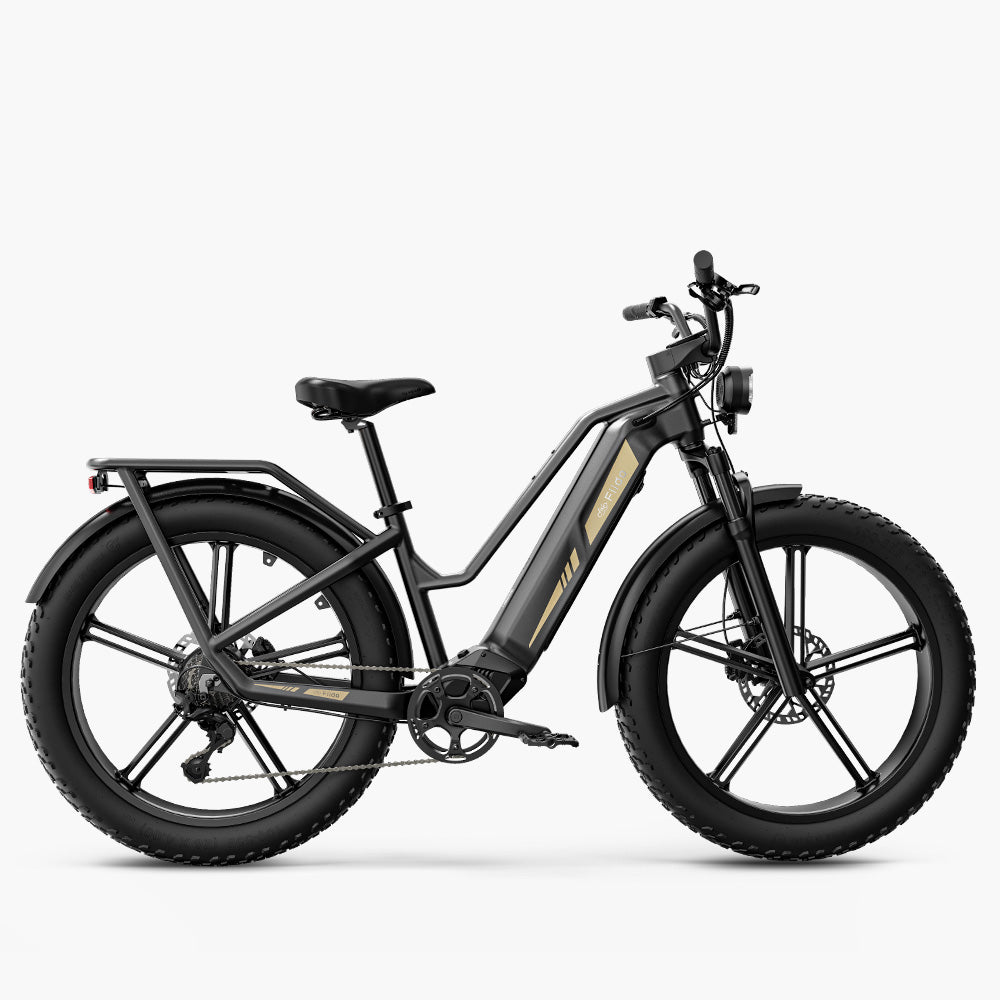
Fiido Titan Robust Cargo Electric Bike
A powerhouse with a 248-mile range and 4-piston brakes, ideal for hunting and fishing trips.
Reminder: Prices are subject to the product detail page ,some earlier card details may have been updated.
Key characteristics include:
-
Robust frame designed for load-carrying and extended use
-
Pedal-assist system adapted to meet local speed and power regulations
-
Configuration options adjusted according to regional legal requirements
-
Intended for users who require durability and versatility within a compliant framework
By offering different configurations tailored to regional regulations, the Fiido Titan demonstrates how a high-capability electric bicycle can be developed without exceeding the legal boundaries that define an electric bicycle.
Compliance Statement Disclaimer (Recommended)
Fiido electric bicycles are configured differently depending on the destination market.
Specifications, motor output, assisted speed, and features may vary to ensure compliance with local laws and regulations. Riders are advised to follow local traffic laws and use electric bicycles only in accordance with applicable regulations.
13. Primary Sources and Official References
-
United States
https://www.peopleforbikes.org/electric-bikes
https://www.cpsc.gov/Safety-Education/Safety-Guides/Electric-Bicycles -
United Kingdom
https://www.gov.uk/electric-bike-rules -
Netherlands
https://www.rijksoverheid.nl/onderwerpen/fiets/elektrische-fiets
https://www.nvwa.nl -
France
https://www.service-public.fr/particuliers/vosdroits/F35326 -
Poland
https://www.gov.pl/web/infrastruktura
https://eur-lex.europa.eu


