











Introduction | From Feature Stacking to Usage Optimization
Over the past decade, electric bikes have evolved from niche “powered bicycles” into high-frequency urban mobility tools. Today, users care less about just range and power, and more about riding experience, comfort, and maintenance convenience.
Against this backdrop, belt-drive electric bikes are gaining attention among frequent commuters. This isn’t a brand-new technology—it’s an optimized choice for long-term, high-frequency use with minimal maintenance.

How does a belt drive system work?
A belt drive can be simply understood as using a strong toothed belt instead of a traditional metal chain to transfer the power from pedaling and the motor.
When you pedal or when the motor provides assistance, the front sprocket turns the belt, and the belt transfers that power to the rear wheel, moving the bike forward. The belt and the sprockets engage tooth by tooth, so it doesn’t slip and doesn’t rely on lubrication to work.
Unlike a chain, the belt is made as one single piece, without metal links. This means:
-
It doesn’t loosen easily
-
It doesn’t rust
-
It requires almost no cleaning or oiling
This is why many riders find belt-driven bikes quieter and smoother, with far less daily maintenance to worry about.
On electric bikes, these advantages are even more noticeable:
Power delivery feels more even, starts and acceleration are smoother, and the riding experience stays consistent from day one, even after long-term use.
Chains vs Belts: Technical and Usage Comparison
| Dimension | Chain | Belt | belt-drive electric bike Practical Value |
|---|---|---|---|
| Lifespan | 1,000–3,000 km | 8,000–12,000 km | Less frequent replacements for high-frequency riders |
| Maintenance | Regular cleaning, lubrication, tension adjustments | Essentially maintenance-free | Ensures consistent daily commute experience |
| Noise | Moderate | Minimal | Quieter, smoother urban riding |
| Weight | Lighter | Slightly heavier | Lightweight frames (e.g., carbon) can offset belt weight |
| Cost | Low | High | Long-term cost may be lower due to durability |
| Ride Feel | Slightly uneven power delivery | Smooth, stable | Maintains consistent experience over time |
⚠️ Key point: The main value of a belt drive is predictable, consistent performance, rather than maximum performance.
Tip: Most commuters riding 5 km+ daily with medium or high maintenance sensitivity → Belt Drive. For more on chain maintenance, check out our Ultimate Guide to E-Bike Drive System Maintenance.
Engineering Features of Belt Drives
-
Composite one-piece construction: Minimizes stretching and increases lifespan
-
Continuous, smooth power transmission: Works seamlessly with motors and torque sensors
-
Enclosed design: Reduces dust and water exposure, lowering routine maintenance
Analogy: A chain is like a traditional bicycle chain, with friction and noise. A belt is like a car timing belt—smooth, quiet, and reliable.
User Scenarios and Decision Logic
Who Benefits Most from a Belt Drive E-Bike?
-
High-frequency urban commuters: 5–20 km daily rides
-
Users preferring simple operation: Minimal chain maintenance
-
Riders valuing comfort: Quiet, smooth, and consistent pedal assist
Who Should Stick with a Chain Drive?
-
Occasional riders: Weekend or low-frequency use
-
Budget-conscious buyers: Entry-level e-bike users
-
Riders seeking extreme performance or gear customization: Chains allow more flexibility
Quick Visual Guide
| Daily Ride | Low Maintenance | Medium | High Maintenance |
|---|---|---|---|
| <5 km | Chain ✅ | Chain ✅ | Chain ✅ |
| 5–15 km | Chain/ Belt ⚠️ | Belt ✅ | Belt ✅ |
| >15 km | Belt ✅ | Belt ✅ | Belt ✅ |
-
✅ = Recommended
-
⚠️ = Optional (both work)
Tip:
-
Most commuters riding 5 km+ daily with medium or high maintenance sensitivity → Belt Drive
-
Short, occasional rides → Chain Drive
Market Trends and Case Studies
-
Market trend: Belt drives are increasingly common in high-end urban commuters and lightweight models (e.g., Gates Carbon Drive systems).
-
Case Studies: Fiido
-
Fiido Air: Ultra-lightweight (13.75 kg), carbon frame, belt drive, low-resistance natural assist
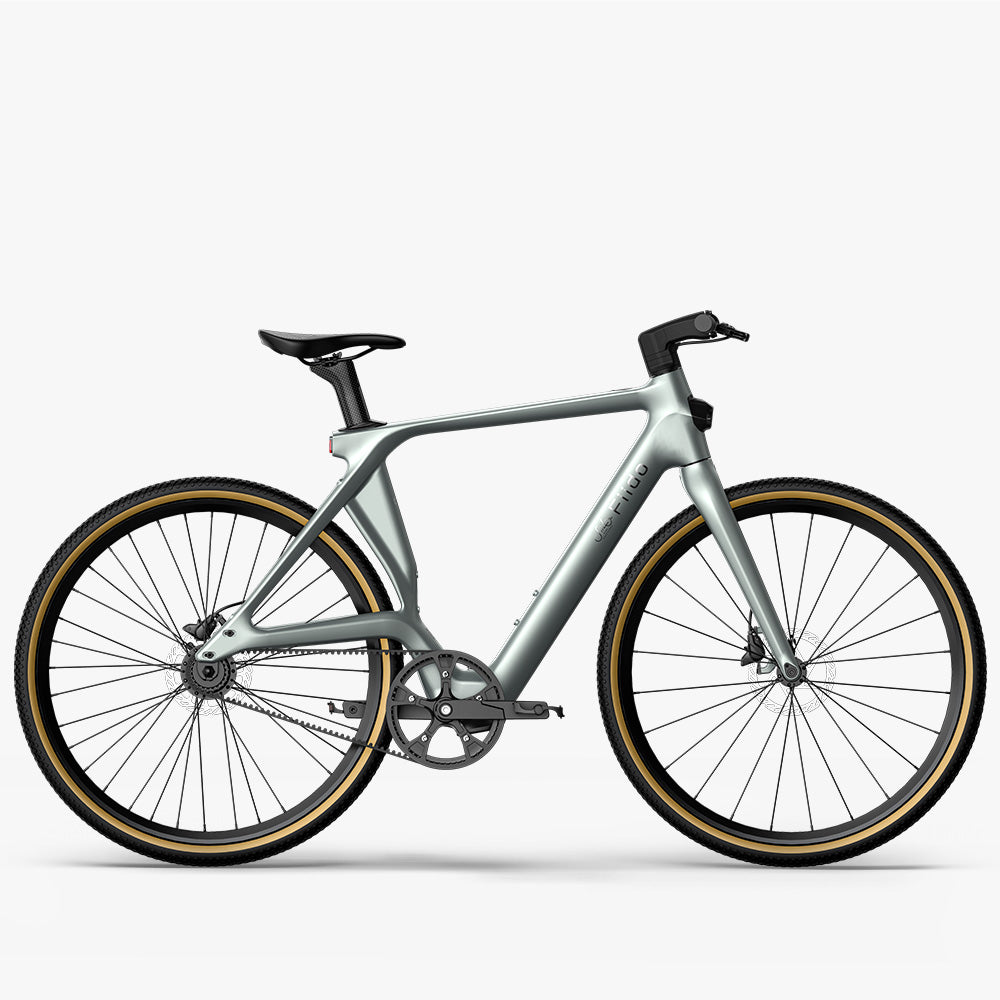
Fiido Air Carbon Fiber E-bike
$1,799.00 $2,799.00Learn MoreA revolutionary lightweight bike, winner of the Red Dot Award.
-
-
-
Reminder: Prices are subject to the product detail page ,some earlier card details may have been updated.
-
Key insight: Successful belt-drive e-bikes don’t just replace the chain, they rethink the entire bike design around the belt’s characteristics.
Conclusion
Belt-drive e-bikes are not meant to replace chains. Instead, they meet the needs of long-term, high-frequency riders seeking low-maintenance, consistent riding experiences.
-
Core value: Consistent performance, predictable behavior, minimal upkeep
-
Selection tip: Use ride frequency and maintenance sensitivity to decide if a belt drive is worth the investment


